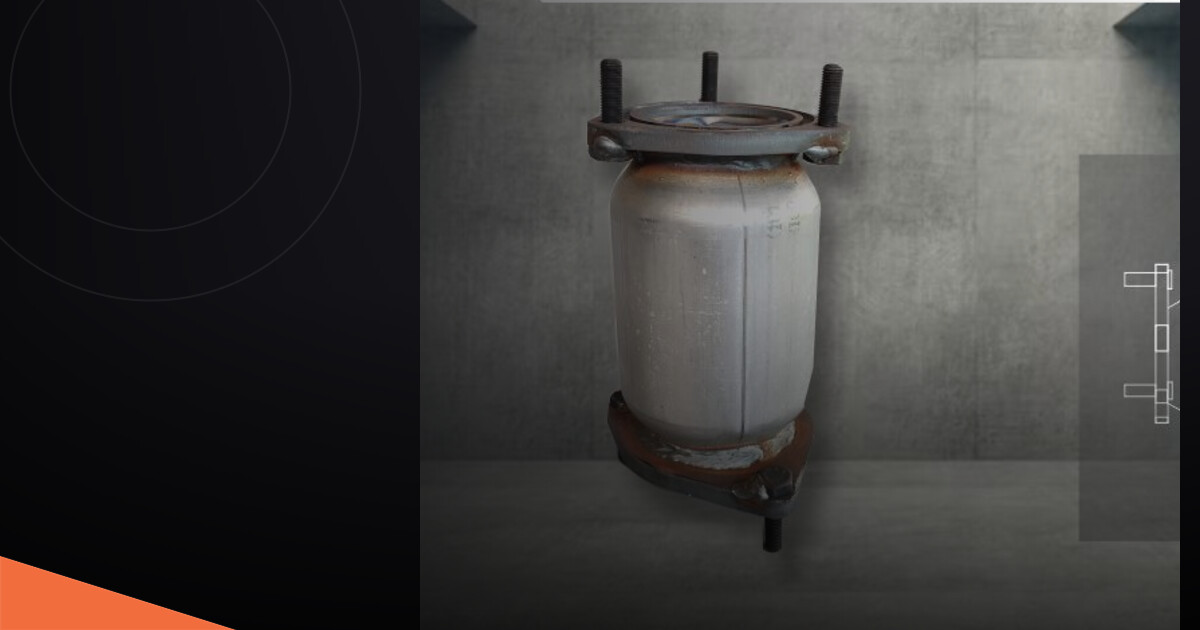
Catching a failing catalytic converter early can save you from a far costlier engine repair and keep you from failing your emissions inspection. The converter (or catalyst) is the exhaust-system component that turns harmful pollutant gases into less damaging compounds. When it gets clogged, contaminated, or breaks apart inside, the car starts giving off warning signs. In this guide we explain the most common catalytic converter symptoms, why they happen, what to do, and when it really is time to replace it.
What the catalytic converter does and why it fails
Inside the converter is a ceramic honeycomb coated with precious metals (platinum, palladium, and rhodium) that triggers the chemical reactions that clean the exhaust gases. That honeycomb is fragile: extreme heat, impacts, and poor combustion gradually wear it down. Most failures don't originate in the catalyst itself; they're the consequence of another engine problem that ends up damaging it.
- Poor combustion: worn spark plugs, faulty coils, or bad injectors send unburned fuel into the exhaust, where it ignites inside the honeycomb and melts it.
- Oil or coolant consumption: damaged seals or gaskets contaminate the honeycomb and coat it, blocking the flow of gases.
- Faulty oxygen sensors: they deliver inaccurate readings and throw off the air-fuel mixture.
- Impacts and corrosion: speed bumps, potholes, or moisture crack the internal ceramic or perforate the housing.
- Low-quality fuel: sulfur and additives shorten the catalyst's service life.
Symptoms of a failing catalytic converter
These are the most frequent warning signs of a failing catalytic converter. You'll rarely see just one; typically two or three show up together.
- Loss of power and sluggish acceleration: if the honeycomb clogs, the gases can't escape and backpressure builds up. The engine "chokes," climbing hills becomes difficult, and throttle response feels weak, especially at high speed.
- Check Engine light on: the most common code is P0420 (catalyst efficiency below threshold). It's the most reliable sign, and it's worth reading with an OBD-II scanner.
- Rotten-egg smell: a sulfur odor coming from the exhaust means the catalyst is no longer properly processing sulfur compounds.
- Rattling or clattering noise: if you hear a metallic rattle under the car, especially on startup or over speed bumps, the ceramic honeycomb has probably broken and is shifting around inside.
- Higher fuel consumption: with the exhaust restricted, the engine works harder to "breathe" and burns more fuel than normal.
- Excessive heat under the vehicle: a clogged catalyst overheats and can even glow red-hot; it's a fire hazard.
- Smoke and excess emissions: thicker smoke or failing your emissions inspection due to high pollutant levels points straight to the catalyst.
- Hard starting or hesitation: in advanced cases, the backpressure is so high that the engine barely starts or stalls at idle.
How to confirm the diagnosis
Before spending money, it's worth confirming the problem. Any reputable shop can run these tests, and they keep you from replacing the wrong part:
- Reading codes with a scanner: the P0420 (or P0430 on V engines) is the first clue. Also check for oxygen-sensor and misfire codes.
- Backpressure measurement: a pressure gauge on the exhaust verifies whether the catalyst is restricted.
- Temperature test: a pyrometer compares the temperature at the converter's inlet and outlet; an abnormal difference reveals the problem.
- Visual inspection: look for a dented or discolored housing, or a honeycomb that's loose when moved.
A P0420 code doesn't always mean a dead catalyst. Sometimes the culprit is a cheap oxygen sensor or an exhaust leak. Diagnose first, replace later.
What to do when the converter is failing
The right order is to address the root cause first and the catalyst second; otherwise, the new replacement will get damaged again.
- Repair the engine first: replace spark plugs, sensors, or seals according to the diagnosis. If oil or raw fuel is getting into the exhaust, any new catalyst won't last long.
- Cleaning, only in mild cases: if the restriction is just starting, a cleaning additive or a cleaning service can help. If the honeycomb is already melted or broken, no cleaning will save it.
- Replacement: when the honeycomb is collapsed, cracked, or glazed over, the only real solution is to replace the converter with a new one.
When to replace the catalytic converter
It's worth replacing it when one or more of these conditions apply:
- The P0420 returns after ruling out sensors and leaks.
- There's a constant rattling noise (the honeycomb is broken inside).
- You fail the emissions inspection and the engine is already tuned up.
- The measured backpressure confirms severe restriction.
- The housing is perforated by corrosion or impacts.
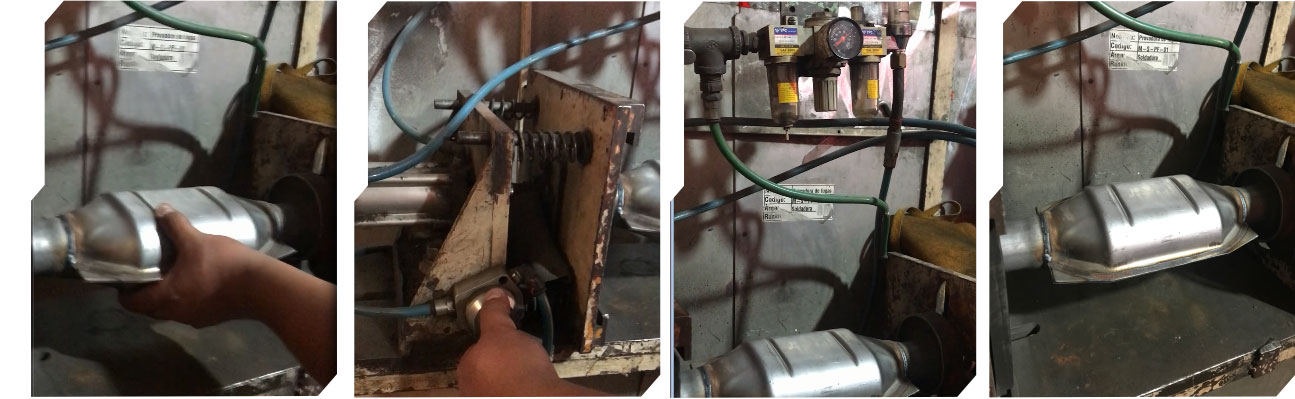
When choosing the replacement part, make sure it's the right one for your model and that it meets emissions standards. At AM Exhaust, a brand of American Muffler, we manufacture replacement catalytic converters in Mexico with quality control and leak testing on every part, designed for shops, distributors, and motorists. You can find the right one for your vehicle using our model-based finder.
Conclusion
A failing catalytic converter almost never comes out of nowhere: loss of power, the Check Engine light, the sulfur smell, and the rattling noise are warnings worth addressing promptly. Diagnose the cause, fix it, and if the catalyst has reached the end of its life, replace it with a reliable one. Check the applications by vehicle to pinpoint the exact part for your car, buy online in our store, or reach out through contact and we'll gladly help you.